

De-installing and removing a machine as heavy and sophisticated as a linear accelerator is not…
Why Using More Than 15 MV Photon Energy May Not Be Ideal
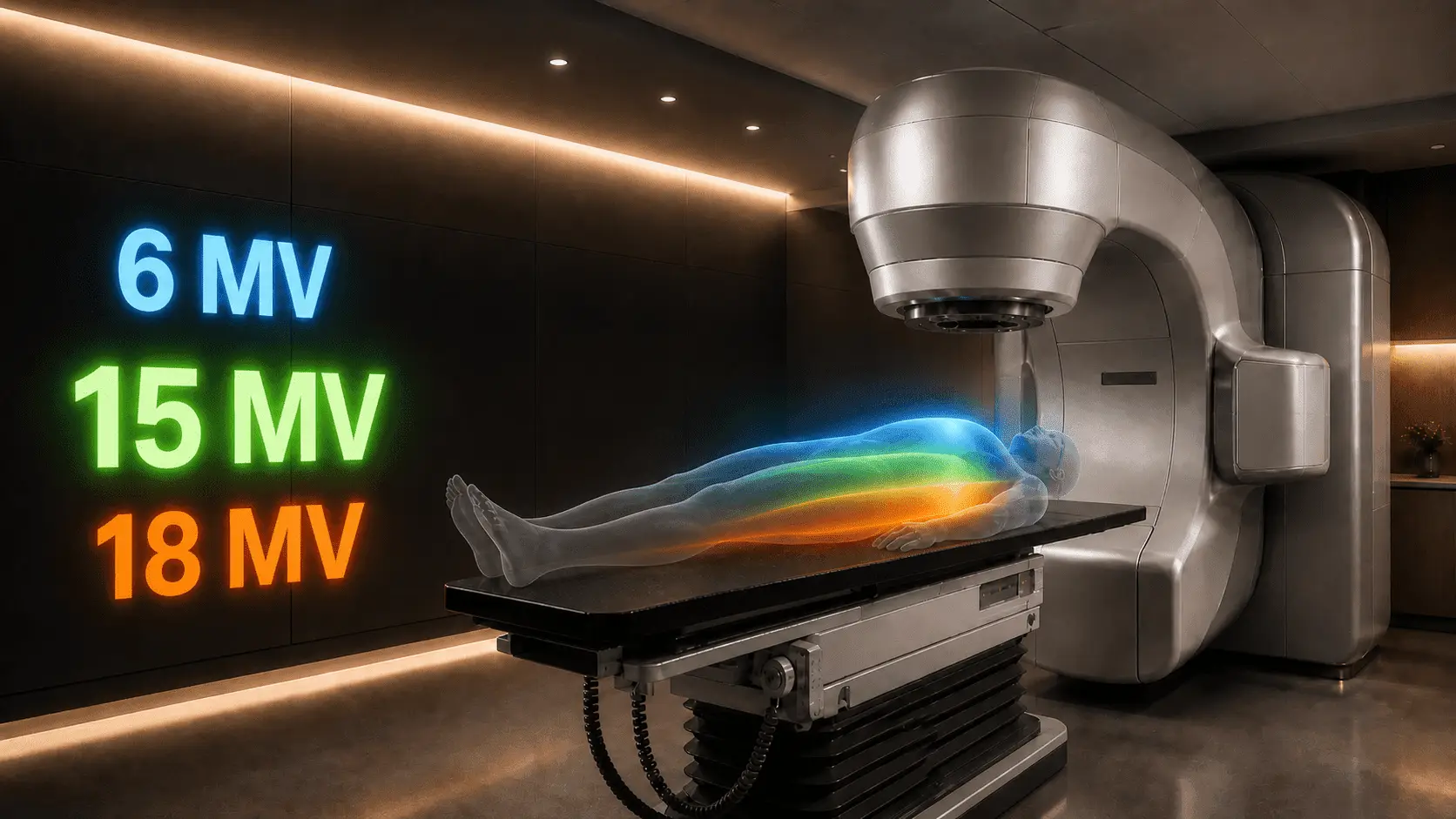
The image above is a conceptual illustration of relative 6 MV, 15 MV, and 18 MV photon energy depth profiles in radiation therapy.
Lee la versión en español aquí.
In radiation therapy, higher photon energy can mean deeper penetration and faster treatments. But beyond 15 MV, those benefits come with hidden risks, including neutron contamination, equipment wear, and costly shielding requirements.
So why do most modern linear accelerators (linacs) stop at 15 MV? Because going higher increases safety risks, adds costs, and offers little clinical benefit in most cases.
What Happens When You Increase Linac Energy?
Most modern linacs use photon energies between 6 and 15 MV. This range delivers enough power to treat deep tumors while keeping radiation side effects and shielding needs under control.

But when photon energy goes above 15–20 MV, it can trigger reactions that release neutrons. These particles are harder to block than regular X-rays. They can travel farther, require much thicker shielding, and increase radiation exposure risks. That means more cost, more safety concerns, and stricter regulations for facilities that use high-energy linacs.
Challenges of Using Linacs Above 15 MV
While 18 MV beams can reach deeper into the body, they come with added risks and costs.
- Neutron contamination: Once you exceed 15 MV, linacs begin producing neutrons. These particles are more harmful than X-rays and require additional shielding to protect patients, staff, and equipment.
- Expensive shielding: Facilities must use thicker concrete or special materials to block neutron radiation, driving up vault construction costs.
- Dose delivery challenges: High-energy beams scatter more, making it harder to shape and control the dose. This reduces precision and increases risk to nearby healthy tissue.
- Increased wear on components: Neutron exposure can damage linac components over time, leading to higher maintenance needs and shorter machine life.
For most treatment needs, linacs using 6 to 15 MV provide an ideal balance of effectiveness, safety, and cost.
Why 15 MV Is the Practical Limit for Most Radiation Therapy

Clinically and operationally, the 6 to 15 MV range covers nearly all treatment needs:
- Deep tumors can still be reached effectively
- Image guidance and modulation techniques improve precision
- Neutron concerns remain far more manageable than with ultra-high-energy beams
- Shielding and room design stay cost-effective
For facilities planning new installations in Latin America and other growing markets, staying within the 6 MV to 15 MV range simplifies both design and long-term operation.
Are There Any Benefits of Using 18 MV or 25 MV Photon Energies?
Energy labels can vary depending on whether BJR 11 or BJR 17 definitions are used. For example, 18 MV under BJR 11 corresponds to 23 MV under BJR 17, while 20 MV under BJR 11 corresponds to 25 MV under BJR 17. For more details, see our guide to photon energies in medical linacs.

Older systems like the Varian Clinac 2500 and Varian 2300CD offered photon energies as high as 25 MV. These were originally designed to treat very deep tumors, especially in areas like the pelvis or abdomen.
But thanks to advancements in treatment planning, image guidance, and modulation techniques, ultra-high photon energies are no longer necessary for most cases. Today’s linacs typically operate in the 6 to 15 MV range to deliver precise treatment while minimizing safety risks and shielding requirements.
Photon Energy in Modern Systems
Most modern linacs commonly use photon energies in the 6 MV to 15 MV range, depending on the model and configuration. Systems such as Varian TrueBeam, Trilogy, Clinac iX, and Halcyon support modern treatment techniques without requiring ultra-high photon energies.
Common energy levels such as 6 MV, 10 MV, and 15 MV are sufficient to treat deep tumors while keeping radiation risks and shielding costs low.

Modern linacs avoid the energy levels where pair production and neutron radiation become a concern. Staying within the 6 to 15 MV range helps facilities lower costs, improve safety, and still provide effective cancer treatment.
Conclusion: Less Is More
For most facilities, linacs in the 6 to 15 MV range offer the best combination of clinical performance, safety, and cost control. Higher energy systems may seem appealing at first glance, but the added shielding, regulatory burden, and neutron risks rarely justify the investment, especially with today’s imaging and treatment planning technologies.
If you are considering a new system, particularly in a cost-sensitive market, choosing a linac in the 6-15 MV range is a practical, effective path forward.
Frequently Asked Questions About Photon Energy in Linacs
What is the ideal photon energy for a medical linear accelerator?
Most modern linacs operate between 6 MV and 15 MV. This range balances effective tumor treatment with manageable shielding requirements and minimal neutron production.
Why are linacs over 15 MV used less often?
Energies above 15 MV trigger pair production and neutron contamination, which increase shielding demands, raise safety risks, and complicate beam control.
Do I need an 18 MV linac to treat deep tumors?
No. With advanced image guidance and intensity modulation, 6–15 MV beams can effectively treat most deep-seated tumors.
Is shielding more expensive for higher-energy linacs?
Yes. Facilities with linacs operating above 15 MV must invest in substantially more shielding to protect against neutron exposure, thereby increasing construction and regulatory costs.
Do manufacturers still make linacs with photon energies over 15 MV?
Some legacy systems, like the Varian 2300CD and Clinac 2500, offered photon energies up to 25 MV, but most new linacs today are designed with a maximum of 15 MV or less. High-energy options above 15 MV are now rare and are typically found only on older systems.

Related Posts


Comments (0)