

De-installing and removing a machine as heavy and sophisticated as a linear accelerator is not…
Low-Dose Radiation Therapy for Osteoarthritis: Why Reimbursement Is Renewing Interest
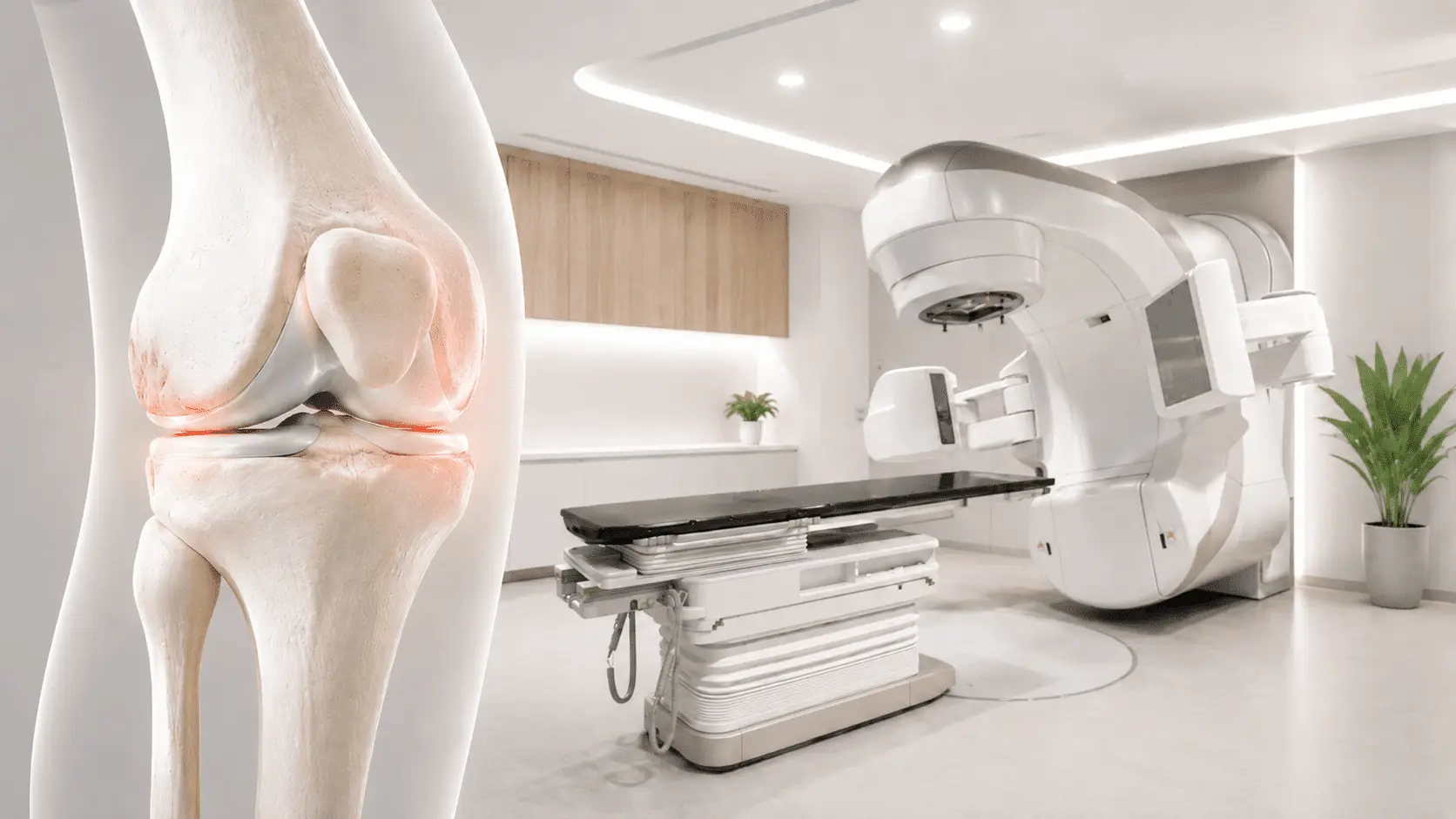
For decades, linear accelerators have been associated almost exclusively with cancer care. This is beginning to change. A growing number of U.S. radiation oncology programs are evaluating low-dose radiation therapy (LDRT) for selected non-cancer conditions, with osteoarthritis drawing particular attention.
Interest is not being driven by one factor alone. Patients and physicians are looking for non-invasive options when conservative care has not provided enough relief, clinical research is expanding, and 2026 radiation oncology coding changes have made reimbursement and program economics a central part of the conversation.
How Low-Dose Radiation Therapy Is Different
LDRT for osteoarthritis uses radiation doses substantially below those used in cancer treatment. Rather than destroying tissue, the goal is to influence inflammatory activity in the affected joint and reduce pain, swelling or stiffness. Treatment is typically delivered in several short outpatient sessions by a radiation oncology team.

That does not make LDRT a cure. It does not regrow cartilage or reverse advanced joint damage, and it is not appropriate for every patient. A 2022 review in the International Journal of Radiation Oncology, Biology, Physics summarized encouraging pain and mobility outcomes while also noting wide differences in study quality, patient selection, dose schedules, and follow-up. A 2024 VA systematic review found insufficient evidence for many benign-disease outcomes and cautioned that single-group improvements cannot establish a causal benefit. Those limitations make multidisciplinary evaluation and informed patient selection essential.
Low-Dose Radiation Therapy Reimbursement for Osteoarthritis
Clinical appropriateness comes first, but reimbursement determines whether a program can be sustained. None of the 2026 external-beam treatment-delivery codes is specific to osteoarthritis. Practices report the radiation oncology services performed, with the diagnosis captured separately.
Beginning in 2026, external-beam treatment delivery was consolidated into three revised CPT codes: 77402, 77407 and 77412. The appropriate code is based on the treatment technique and delivery complexity, not the osteoarthritis diagnosis itself. ASTRO also notes that the revised structure no longer separates delivery simply as 3D versus IMRT.
A valid procedure code does not establish medical necessity, nor does it guarantee payment. Coverage may vary by payer, diagnosis, prior authorization, documentation, and site of service. Where coverage is available, LDRT may allow radiation oncology programs to serve an additional patient population using existing expertise and treatment capacity, but the business case should follow the clinical case.
How Low-Dose Radiation Therapy Could Expand Radiation Oncology Programs
Operationally, LDRT is still radiation therapy. It requires a qualified radiation oncologist, medical physics and dosimetry support, trained therapists, treatment planning, commissioning, QA, radiation safety, referral pathways, and follow-up. It should be considered only after the patient’s diagnosis, prior treatments, age, comorbidities, and alternatives have been reviewed.

The shift is already visible in community care. A recent WCBD News 2 report profiled physicians at HCA Healthcare’s Trident Medical Center using low-dose radiation for selected patients with osteoarthritis pain, illustrating how a treatment long associated with European practice is entering more U.S. conversations.
At this stage, LDRT for osteoarthritis is an emerging option rather than a universal standard. Programs that explore it will need to balance patient need, clinical evidence, coverage policy, and responsible use of treatment capacity.
How ROS Can Support Program Expansion
For facilities evaluating whether existing capacity or refurbished equipment could support an appropriate expansion of services, ROS can help provide, install and support refurbished linear accelerators for qualified radiation oncology programs. Please contact ROS to discuss how we can support your program.
Frequently Asked Questions About Low-Dose Radiation Therapy for Osteoarthritis
What is osteoarthritis, and how common is it in the United States?
Osteoarthritis is the most common form of arthritis and occurs when cartilage and other tissues within a joint gradually break down over time. It most commonly affects the knees, hips, hands, and spine. According to the CDC, an estimated 33.2 million U.S. adults age 20 and older have diagnosed osteoarthritis.
How does low-dose radiation therapy treat osteoarthritis pain?
Low-dose radiation therapy (LDRT) uses radiation doses substantially below those used in cancer treatment. Rather than destroying tissue, it is intended to reduce inflammatory activity within the affected joint, which may help relieve pain, swelling, and stiffness in selected patients. It does not regenerate cartilage or reverse existing joint damage.
Who may be a candidate for low-dose radiation therapy for osteoarthritis?
LDRT may be considered for carefully selected patients with persistent osteoarthritis pain after conservative treatments have not provided adequate relief. Treatment decisions should be based on the patient’s diagnosis, prior treatments, age, overall health, comorbidities, and available alternatives.
Is low-dose radiation therapy for osteoarthritis widely used in the United States?
Low-dose radiation therapy has been used for benign conditions in parts of Europe for many years and is receiving renewed interest in the United States. Some U.S. radiation oncology programs are evaluating or offering LDRT to selected patients, but it is still considered an emerging treatment option rather than a universal standard of care.
Is low-dose radiation therapy for osteoarthritis covered by insurance?
Coverage varies by payer and clinical circumstances. The radiation therapy delivery code is based on the treatment performed rather than the osteoarthritis diagnosis itself. Medical necessity, prior authorization, documentation, site of service, and payer policies can all affect reimbursement.
What beam energies are typically used for low-dose radiation therapy?
There is no single beam energy required for every osteoarthritis treatment. Published LDRT protocols commonly use megavoltage photon beams, often 6 MV, but the appropriate beam depends on the joint being treated, patient anatomy, and the prescribed treatment technique. Electron beams may also be appropriate for some superficial treatment sites. Ultimately, the treating radiation oncologist and medical physicist determine the most appropriate treatment approach for each patient.
Can a refurbished linear accelerator support low-dose radiation therapy?
Many refurbished linear accelerators are likely capable of supporting low-dose radiation therapy, depending on their specific configurations and the clinical protocols used. Models such as the Varian Clinac iX, Trilogy and TrueBeam, as well as the Elekta Synergy, Infinity and Versa HD, may offer the photon or electron capabilities needed for LDRT. Suitability should be confirmed based on the machine’s installed beam energies, treatment-planning compatibility, imaging capabilities, commissioning status, and the clinical requirements of the program.

Related Posts


Comments (0)