

Last Updated: October 23, 2026 What are the vault room dimension requirements to install a…
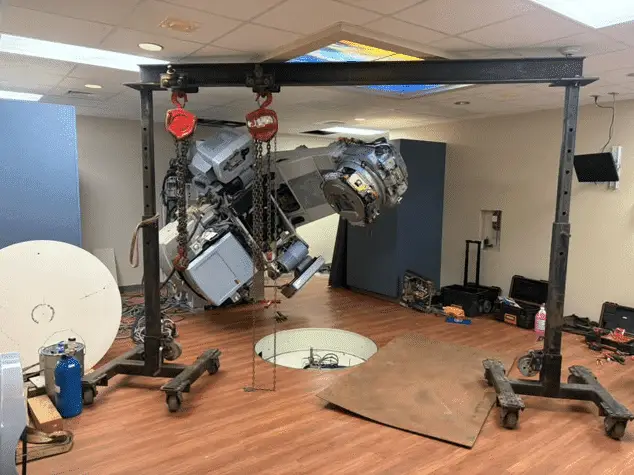
Linear Accelerator Disposal: Radioactive Components, Hazardous Materials, and Proper Decommissioning
Why hospitals and equipment owners should look beyond the scrap yard when retiring a medical linac.
When a medical linear accelerator reaches the end of its useful life, removing it from a hospital is only part of the job. A linac contains substantial amounts of steel, copper, lead, tungsten and other metals. It may seem reasonable to send an obsolete machine directly to a recycler or scrap yard, but for certain linacs, proper disposal requires more care. A decommissioning plan is often needed.
Higher-energy medical linacs may contain components that have become radioactive through neutron activation. Some machines also contain beryllium, lead and, in older models, depleted uranium. At ROS (Radiology Oncology Systems), we believe responsible decommissioning should include identifying these materials, dismantling appropriate assemblies, radiation assessment and individual party responsibilities when warranted and documented disposition—not simply treating an intact linac as ordinary scrap.
Why high-energy linacs deserve additional attention
Unlike cobalt therapy units, medical linear accelerators do not ordinarily rely on a sealed radioactive source to produce the treatment beam. Instead, they generate radiation electrically. At sufficiently high photon energies, photonuclear reactions can produce neutrons, which can then activate certain metals, making previously stable material radioactive.
Linacs capable of operating at approximately 10 MV and above deserve particular assessment, although 10 MV is not an automatic dividing line between radioactive and nonradioactive machines. Actual activation depends on the equipment design, materials, energies used, total workload, and time since the last operation. Activation is generally concentrated in and around the treatment head.
How cobalt-60 and other radionuclides can be produced
Stable cobalt-59 present in an alloy or component can capture a neutron and become cobalt-60. With a half-life of about 5.27 years, cobalt-60 can remain detectable long after the machine has been retired. Other reported activation products in medical linacs include cobalt-57, tungsten-181, tungsten-187, antimony isotopes, and gold-198. Their occurrence and persistence vary by model and exposure history.
The important distinction is that a higher-energy linac can create radioactive material within its own components during use; it is not necessarily manufactured with a cobalt-60 source.
Which components may require assessment?

Parts in or near the beam-producing and beam-shaping structures merit special attention. Depending on the model, these may include:
- Bending magnet assemblies and nearby metal structures
- Target assemblies and associated hardware
- Primary and secondary collimators and flattening filters
- Tungsten shielding and other dense beam-shaping components
- Metallic alloys containing cobalt or trace cobalt in the treatment head
- Flight tube
- Wedge assembly (all treatment heads)
- Imaging panels
A bending magnet is not inherently radioactive; whether any part is activated must be established by its composition, location, and exposure history. An external dose rate reading of a fully assembled machine may not adequately characterize components concealed inside heavy shielding. A model-specific dose survey and appropriate disassembly can help identify and segregate materials of concern.
Beryllium: a toxicity hazard rather than a radiation source

Certain linac designs use beryllium windows, foils, or other parts. Solid, intact beryllium does not present the same exposure scenario as airborne beryllium particles. Cutting, grinding, crushing, or shredding it can create dust that presents serious inhalation hazards, including chronic beryllium disease. Beryllium-containing parts should be identified before destructive scrap processing and managed using appropriate occupational and waste controls.
Older machines may contain depleted uranium

Some older linear accelerators used depleted uranium as dense shielding. Its presence is model-dependent, not universal. Depleted uranium requires special radiation, contamination and waste-management consideration; it should not enter a conventional scrap stream without appropriate evaluation, including both dose and contamination monitoring, and any required authorization.
Related ROS article: Removing Linear Accelerators with Depleted Uranium (DU) Counterweights
Lead, tungsten, and other materials

Lead shielding and lead-bearing components may require hazardous-waste evaluation, depending on their condition, intended disposition, and applicable law. Tungsten and other dense metals can also be relevant to activation assessments. Copper, steel, and aluminum may be suitable for conventional recycling once properly sorted and cleared for the selected recycling pathway. Hazard classification should be based on the actual components and applicable rules rather than assuming that every heavy metal is radioactive.
Why sending an intact linac straight to scrap can create problems
Potentially activated parts may be a small fraction of a linac’s overall mass and may be located within shielded assemblies. A whole-machine dose survey alone may not always establish the status of internal pieces that will later be cut, crushed, or melted. Similarly, a recycler may not recognize a beryllium window or legacy shielding material unless it has been identified and removed in advance.
ROS does not claim that all historical linac scrap disposals were unsafe. The practical concern is that incomplete identification and documentation can create downstream risks for scrap processors, equipment owners, and the institutions that released the machines.
The ROS approach to responsible linac disposal
ROS has extensive experience removing, installing, servicing, and handling linear accelerators. For retired machines routed through its disposal process, ROS arranges for appropriate dismantling and segregation, including work at the RadParts facility in Michigan when applicable. Depending on equipment history and model, the process can include:
- Reviewing machine model, photon-energy configuration, and service history
- Identifying assemblies where neutron activation is plausible
- Disassembling relevant structures to access components of concern
- Identifying and segregating beryllium and legacy shielding materials
- Conducting or arranging radiation measurements and qualified review as appropriate
- Separating conventional recyclable metals from materials requiring controlled management
- Documenting the destination and disposition of materials in accordance with applicable requirements
A thorough dismantling and separation effort can require approximately a full day of skilled labor for a typical linac, in addition to hospital removal work. Actual time varies with machine design, condition, survey findings, and disposal requirements.
ROS contracts qualified disposal companies to ensure hazardous materials are properly managed in accordance with applicable regulations. Depleted uranium (DU) components, when present, are not transported by ROS but are handled separately by appropriately qualified and authorized professionals.
Why the additional costs can be justified
Transporting a retired linac to a qualified facility and carefully dismantling it can cost more than delivering the machine intact to a scrap yard. However, the lowest immediate disposal price is not necessarily the lowest total risk or cost. Identifying, assessing, and segregating components before recycling can reduce the risk of contamination incidents, worker exposure, rejected loads, regulatory complications, and future questions about where a machine’s materials went.
For hospitals, cancer centers, and other equipment owners, a clearly documented disposal pathway can offer lasting reassurance.
Responsible decommissioning is part of responsible ownership
Removing an obsolete Varian, Siemens, Elekta, or other medical linear accelerator should not end when the machine leaves the treatment room. It should include an informed decision about its components and their final disposition.
At ROS, the objective is straightforward: know what is inside the machine before it becomes scrap. The extra transportation, dismantling, testing, and documentation may take more time—but they can help protect healthcare facilities, contractors, recyclers, workers, and the environment.
To discuss a linear accelerator removal or responsible disposal project, contact Radiology Oncology Systems.
Regulatory note
Requirements for accelerator-produced radioactive material, depleted uranium, beryllium, and other hazardous materials vary by state and by the waste classification and disposal pathway. This article provides general information. Equipment owners and disposal providers should confirm applicable requirements with qualified radiation-safety personnel, state regulators, and authorized disposal vendors.
Frequently Asked Questions (FAQs) About Linear Accelerator Disposal
Do older linear accelerators contain radioactive materials?
Some older linear accelerators contain depleted uranium shielding, which is radioactive. Additionally, higher-energy linacs, both older and newer, can develop radioactive components through neutron activation during operation. Not all linacs contain radioactive materials that require special disposal. The machine’s model, energy configuration, materials, and operating history help determine what assessments are needed.
Can an old linear accelerator be recycled as scrap metal?
A retired linear accelerator should not be sent directly to a scrap yard without a proper assessment. Certain components may contain radioactive or hazardous materials that require specialized handling. An experienced linac disposal company can identify and separate these materials before recycling. Once properly evaluated, many components containing steel, copper, aluminum, and other metals may be suitable for conventional recycling.
Which parts of a linear accelerator can become radioactive?
In higher-energy linacs, neutron activation can affect certain components, particularly those in or near the treatment head. These may include target assemblies, collimators, flattening filters, shielding, and nearby metal structures. The presence and level of radioactivity vary by machine and operating history. Qualified radiation-safety personnel can determine which components require additional assessment or special handling.
What hazardous materials can be found in older linear accelerators?
Depending on the manufacturer and model, older linacs may contain depleted uranium shielding, lead, and beryllium-containing components. Some machines may also have activated metallic components, including those containing tungsten. These materials present different risks and may require specialized identification, handling, and disposal. Not every older linac contains these materials, making a model-specific assessment important.
What is involved in professional linear accelerator removal and disposal?
Professional linac removal begins with evaluating the equipment, treatment room, and available removal path. The process may require coordinating with hospital personnel, planning specialized rigging, dismantling equipment, and safely transporting heavy components out of the facility. Responsible disposal also involves identifying potentially radioactive or hazardous materials, arranging appropriate assessments, separating recyclable components, and documenting their final disposition.
What factors affect the cost of linear accelerator removal and disposal?
Costs depend on the linac model, equipment condition, facility layout, transportation requirements, and disposal needs. Machines located in basements, confined treatment vaults, or areas with limited access may require customized rigging, specialized lifting equipment, or additional labor. Radiation assessments and the handling of hazardous materials can also affect the overall cost. Each project should be evaluated based on its specific requirements.
What should hospitals look for when choosing a linear accelerator removal and disposal company?
Hospitals should look for a company with experience removing and handling radiation therapy equipment, including complex installations and challenging facility layouts. The provider should understand specialized rigging, equipment dismantling, potentially hazardous components, and appropriate disposal pathways. A qualified provider should also explain how materials will be assessed, handled, and documented throughout the project, including coordination with qualified and authorized disposal partners when necessary.

Related Posts


Comments (0)